
REVOLUTIONIZING THE CAR BUYING EXPERIENCE
How might we change simplify the traditional car buying experience?
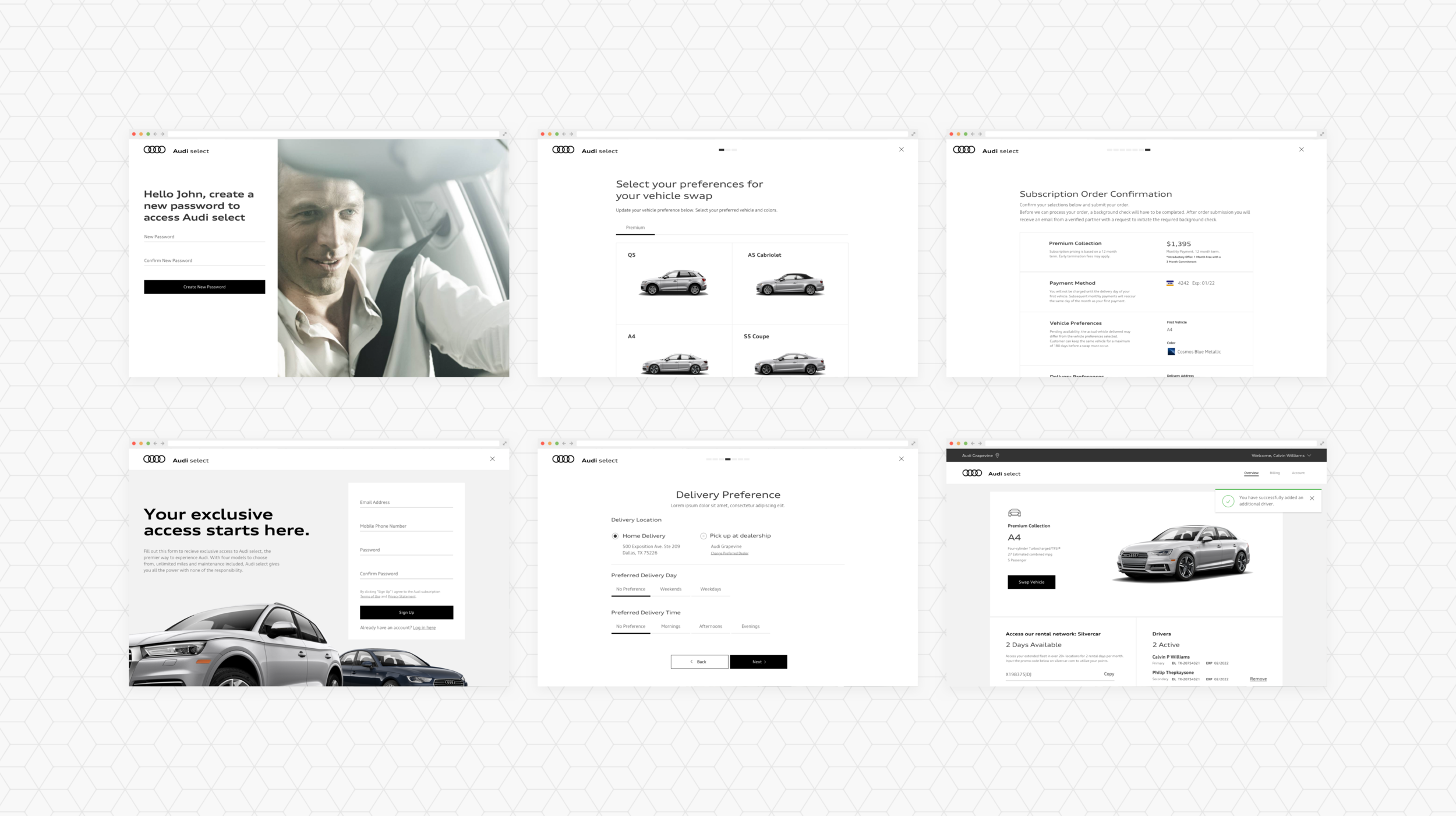
Audi select was a 8 month project in where we designed and developed Audi’s car subscription platform. This case study focuses on the consumer platform portion of the project. Silvercar was successfully shipped in September of 2018!
MY ROLE
Product Designer at Dialexa
Methods
Stakeholder Interviews, Market Research, Competitive Analysis, User Interviews, Affinity Diagram, User Personas, Journey Map, Service Blueprint, Usability Testing.
Teammates
Phil (Senior Designer), James (Design Manager), Marilou (PM) Bhavik (Project Manager)
The Problem
Audi was looking for an innovative way to fully utilize their unsold vehicles sitting on dealership lots. Audi also saw this as an opportunity to appeal to aspirational buyers.
We hoped to address this question: How might we change simplify the traditional car buying experience?
DESIGN PROCESS
We followed the Dialexa Design process to investigate how consumers went through the traditional car buying process based on their preferences. Letting user research be our guide, we brainstormed and designed multiple solutions. We then tested our ideas via usability tests and developed high-fidelity interactive prototypes based on our findings.
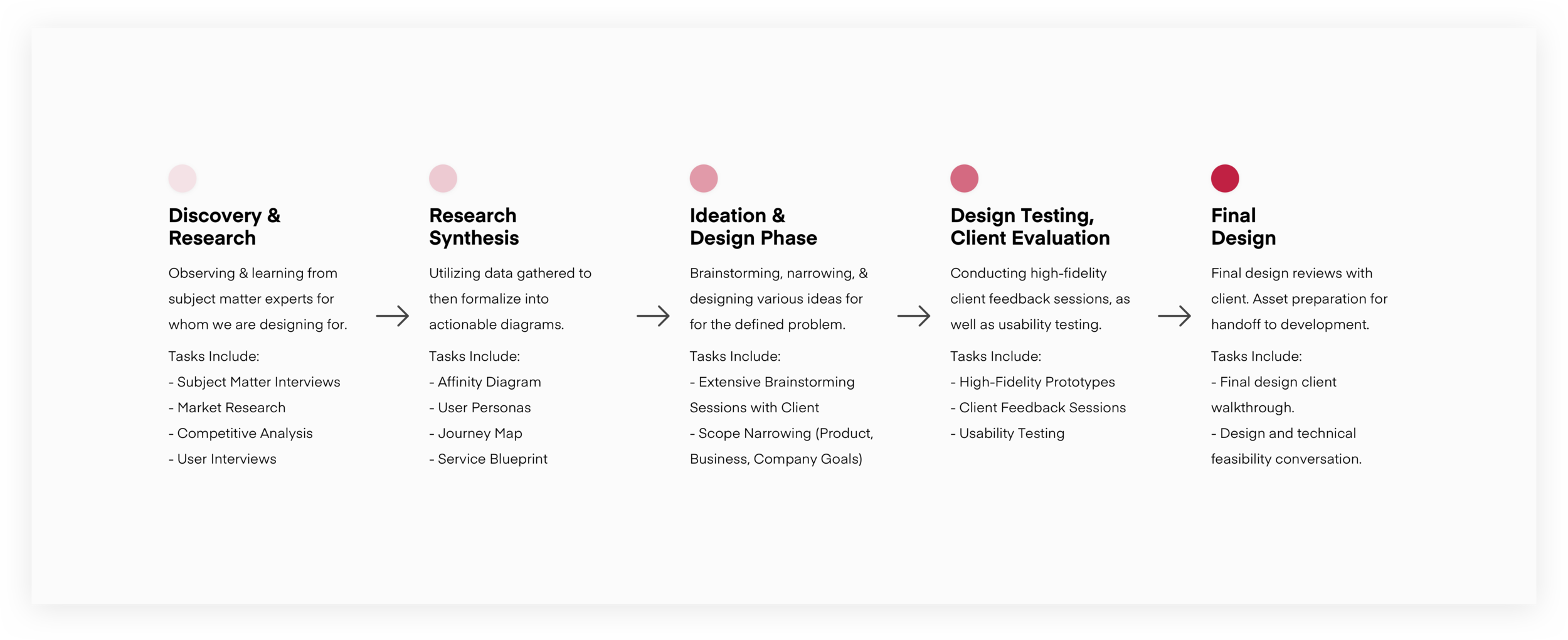
Design process for this specific project, other projects had different processes.
DISCOVERY & RESEARCH
We had about a month to explore, research, interview, and synthesis. Research was conducted at the Dialexa offices (Dallas, TX), Silvercar offices (Austin, TX), and Silvercar Audi pilot dealership (Grapevine, TX). Below were some goals I set.
Define people's common behaviors when purchasing a car.
Define the standard process for purchasing a car.
Determine what can make the car buying process satisfying.
Determine users’ biggest frustrations when trying to purchase a car.
Understand how sales, managers, and finance team members interact with people.
Understand user needs when purchasing a car and identify areas for improvement.
Interviews Tools Used: Notebook, Google Hangouts, & Zoom.
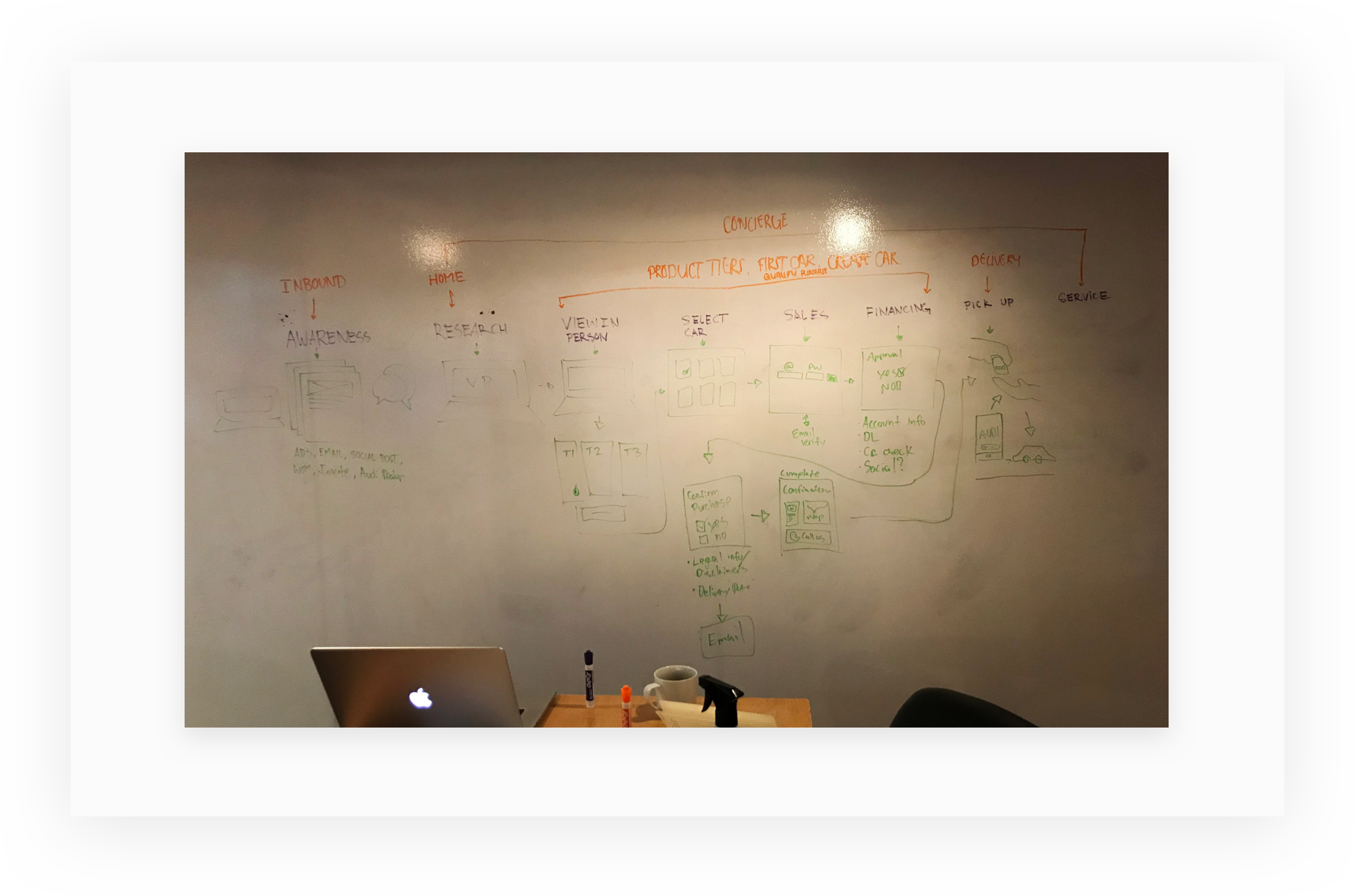
Early white-boarding session of the Audi select flow
Primary Research - Subject Matter Interviews
We started by conducting 3 subject matter expert (SME) interviews with both Audi employees to learn about Audi’s business and product goals for Audi select. We asked questions like: Why did Audi on-demand fail in Europe? What are you adjusting for Audi select to succeed in America? What are Audi‘s consumer & market demographics?
High Level Findings:
Audi on demand (Europe’s iteration) failed due to customers being so accustomed to transportation. The 12 month commitment was also not favorable.
Audi was hoping to appeal to aspirational buyers (younger, educated college graduates looking for their first entry into the luxury car market).
Audi’s current consumer demographics are 70% College Graduates, 60% Married, 20% Households With Children, 40 Years Median Age, a $100,000 Median Household Income, 70% male owners, and 30% women owners.
Secondary Research - Competitive Analysis
To start with the research, we analyzed 7 direct competitors owned by other manufacturers in the car subscription industry.
High Level Findings:
6/7 subscription services included insurance, maintenance, cleaning and monthly vehicle exchanges at no additional cost.
Access by BMW was the only service that offered corporate memberships.
6/7 subscription services were trialing pilots in one city.
Membership fees ranged from $495 - $600. Monthly Fees ranged from $700 (Volvo) - $3100 (Book by Cadillac). We felt Audi was offering the best value & selection.
5/7 subscription services offered unlimited mileage, Volvo & Lexus limited users to 1,250 monthly, 15k yearly.
Volvo was the only manufacturer that offered both desktop & mobile experiences. We felt as though a mobile experience (app) was premature.
Volvo’s pilot program offered vehicles to be fully customized but was facing issues with vehicles not being delivered on time. Customers we’re receiving 1-2 month delays.
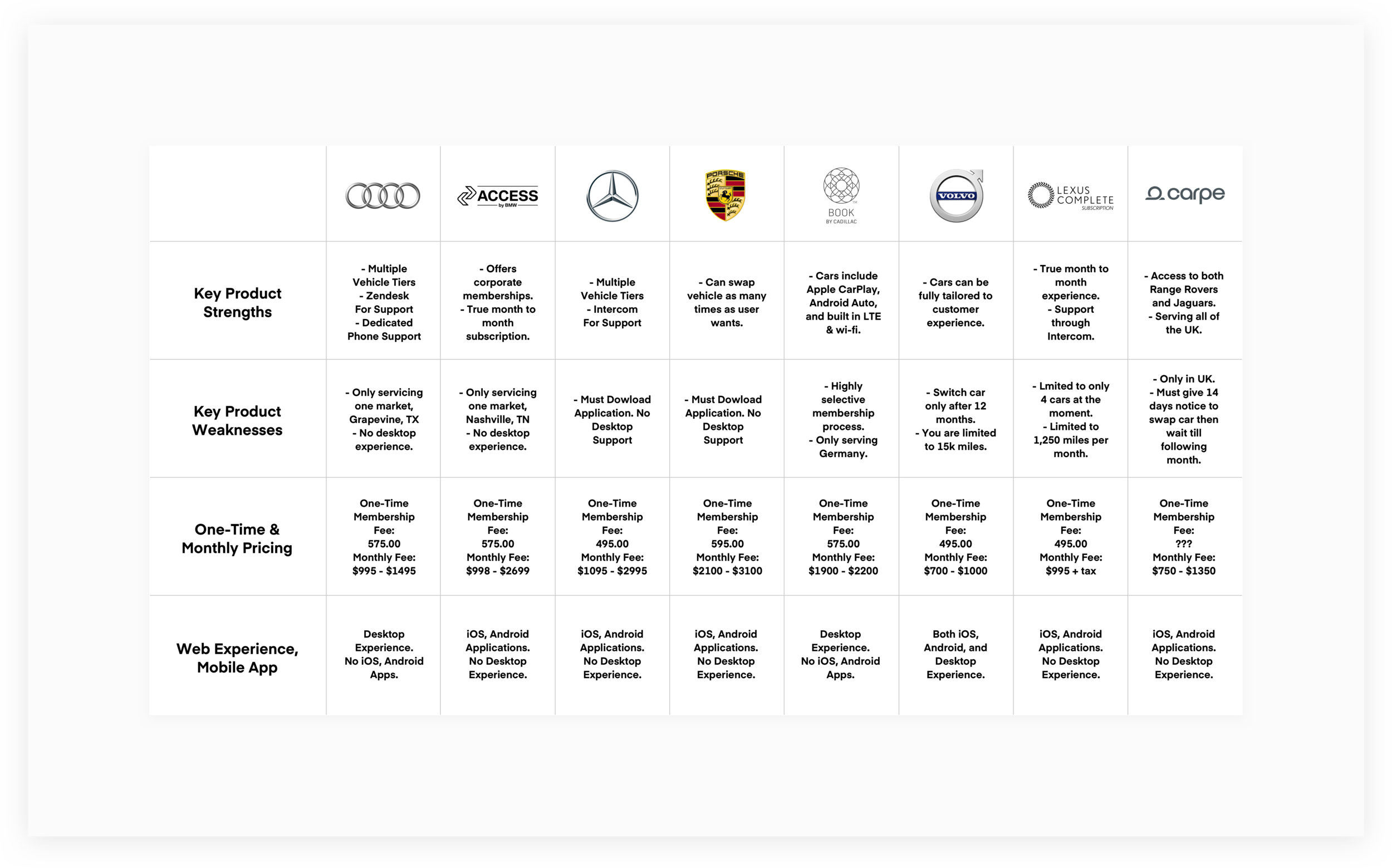
Audi select Competitive Analysis chart
Primary Research - User Interviews
To better understand the perspective of the target user, we interviewed 3 Audi owners to collect qualitative information who after briefly speaking to, had interest in a car subscription service. I saw this as an opportunity to learn about their preferences, motivations, and frustrations as they relate to the traditional car buying process.
Research Assumptions:
The user experience is simple, and users should have no problem navigating through.
Users entering a luxury car dealership don’t want to bombarded by sales team members but shown a minimal level of concierge/acknowledgement.
Users’ habits on a music streaming service are similar to their habits on social media platforms.
Secondary Research: User Personas
I created provisional personas that reflected the data I had collected through user research. Getting a sense of the general target audience helped me think about how the business would appeal to different demographics with varying needs.
Silvercar by Audi was interested in breaking expanding and appealing to a broader demographic, so when tasked with creating personas that we’d use alongside the entire project. We placed emphasis on both aspirational and expected buyers.
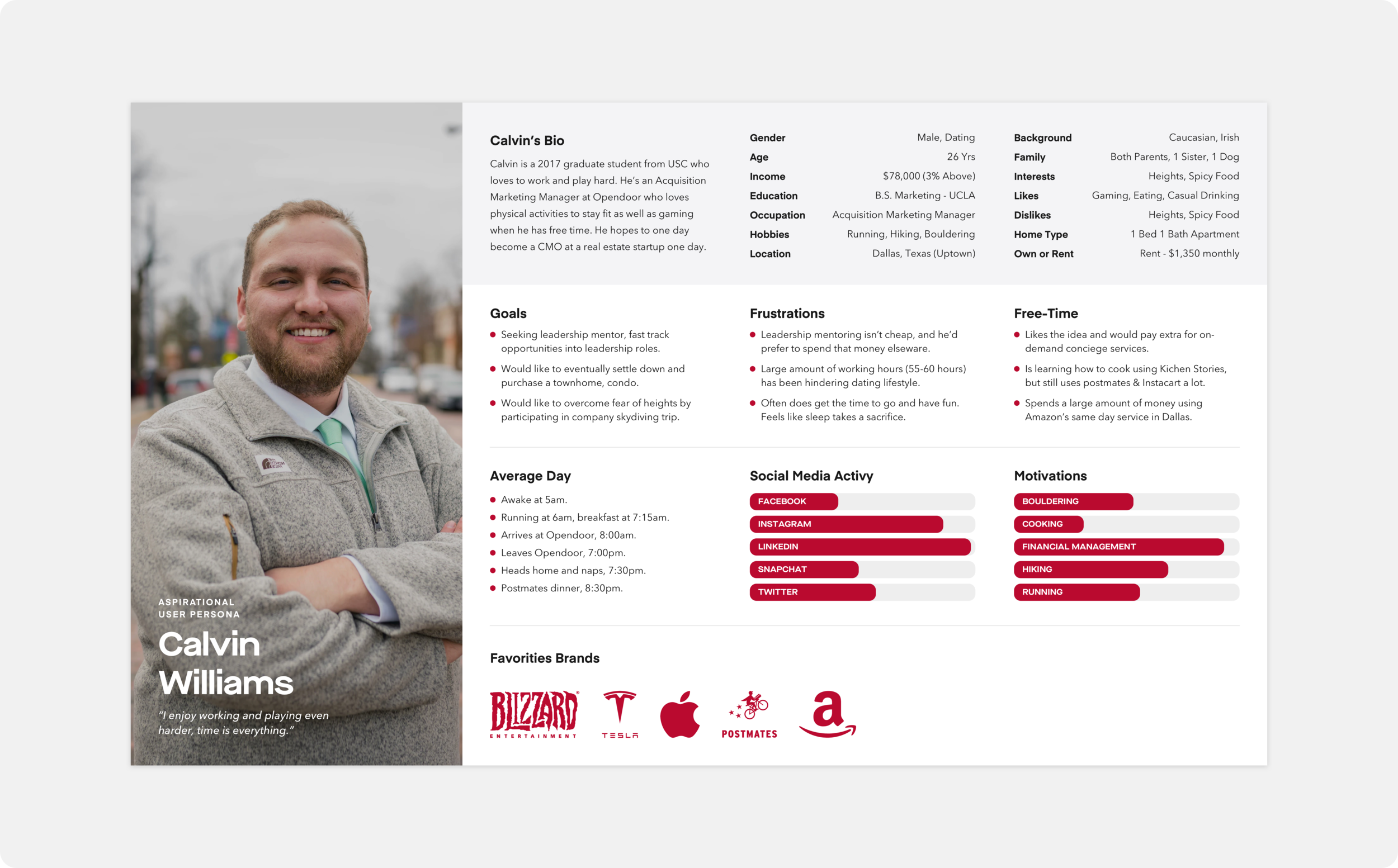
Calvin Williams - The Aspirational User Persona
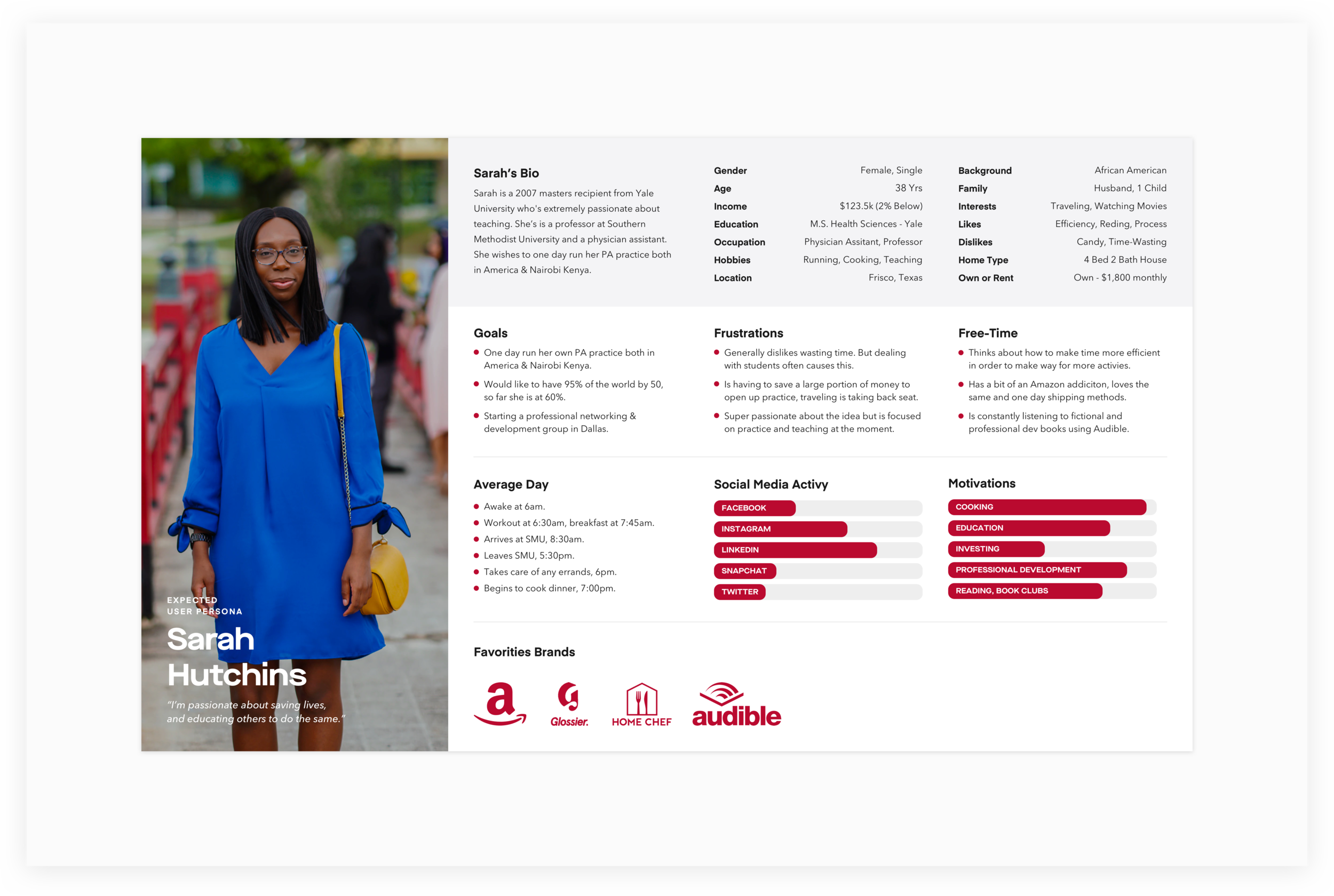
Sarah Hutchins - The Expected User Persona
Secondary Research: Journey Map
The objective of the engagement was to build a car subscription platform for Silvercar by Audi. The platform was to include a consumer platform and enough of an admin portal to make the consumer project work. We compared this process to a traditional leasing process and in turn identified parallels in which we were able to define points of opportunity.
The initial platform will support 1 market and about 50 subscribers. Iy will be architected and built with the knowledge that the platform will scale to many markets and consumers.
Guiding Principles -
Simplicity - A purchase on this scale can be stressful. Simplification offers clarity and focus throughout the process.
Flexibility - As a user, I need a system that adapts to my demanding needs and offers me curated options.
Audi select Pilot Journey Map
Service Design Blueprint
To help us identify current gaps in the user experience, we created a service design blueprint. Through this exercise, we identified new entry points for the consumer platform. In addition, we were also able to identify both front end and back end processes needed to support the platform.
Interesting Findings:
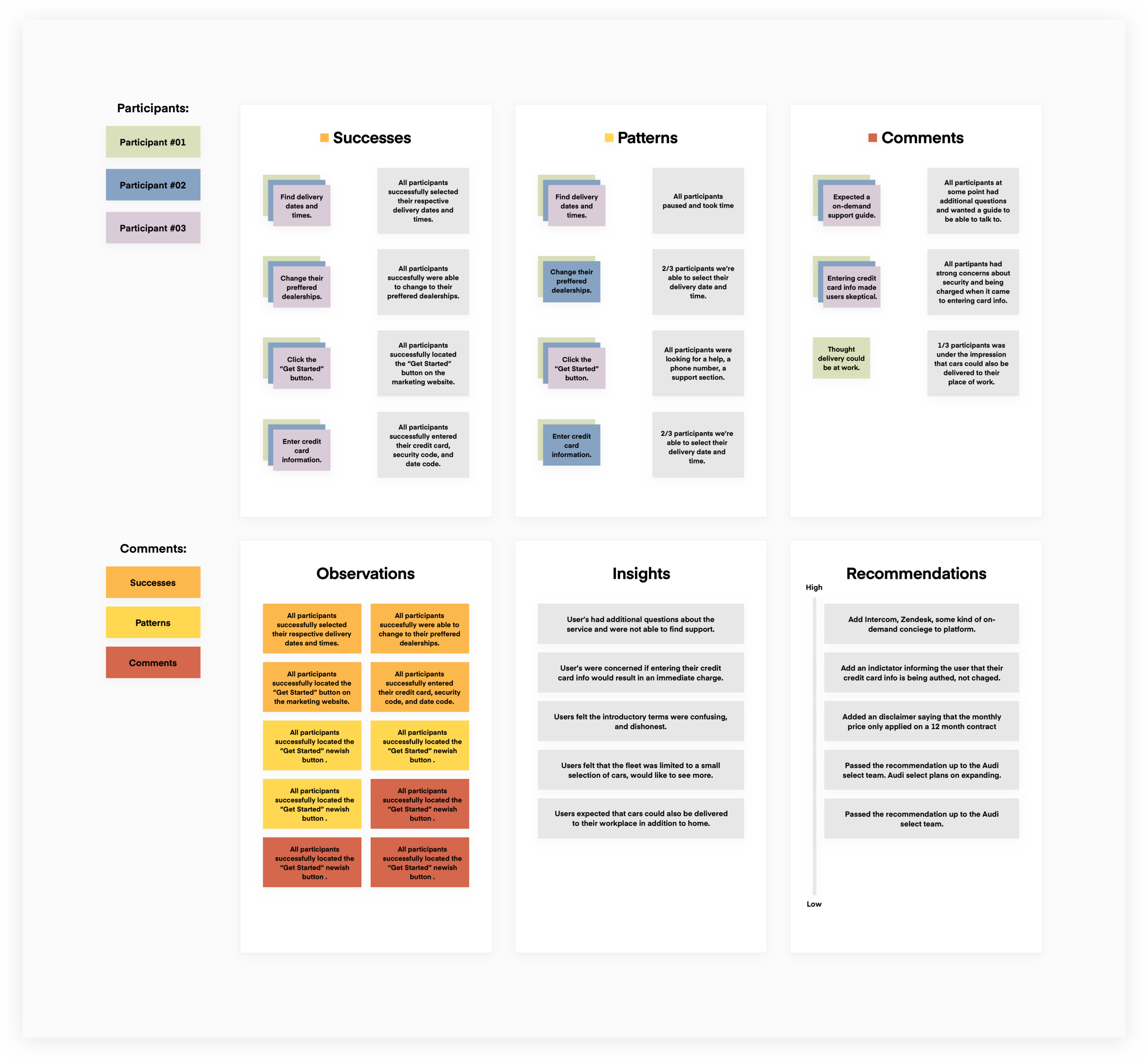
Although users wanted enjoyed how simple the process of being able to lease a car was, the idea of not having customer support to talk to along the way was frustrating, it almost felt to users as if the data they were putting in . From this we suggested Zendesk, Intercom to be adding into the transaction booking flow.
Users felt very uncomfortable placing their personal information on the site (even with emphasis on security & encryption within the design), and the ability to do this through an on-demand concierge (customer service) was important.
Audi select User Pilot Service Blueprint
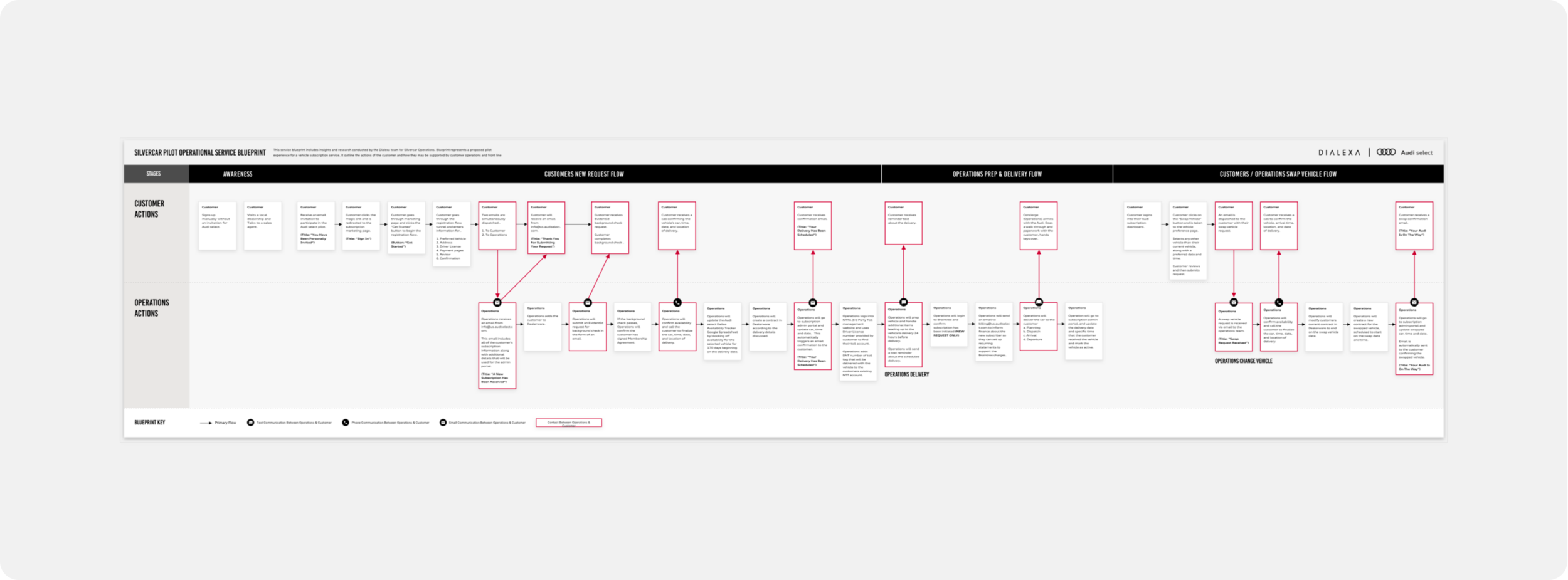
Audi select User Pilot Service Blueprint
Usability Testing
We usability tested with 3-5 men and women with sketched walkthrough. The participant pool was comprised of people between the ages of 23 and 45 with an income over $55k.
Where our assumptions broke down:
Although users wanted enjoyed how simple the process of being able to lease a car was, the idea of not having customer support to talk to along the way was frustrating, it almost felt to users as if the data they were putting in . From this we suggested Zendesk, Intercom to be adding into the transaction booking flow.
Users felt very uncomfortable placing their personal information on the site (even with emphasis on security & encryption within the design), and the ability to do this through an on-demand concierge (customer service) was important.
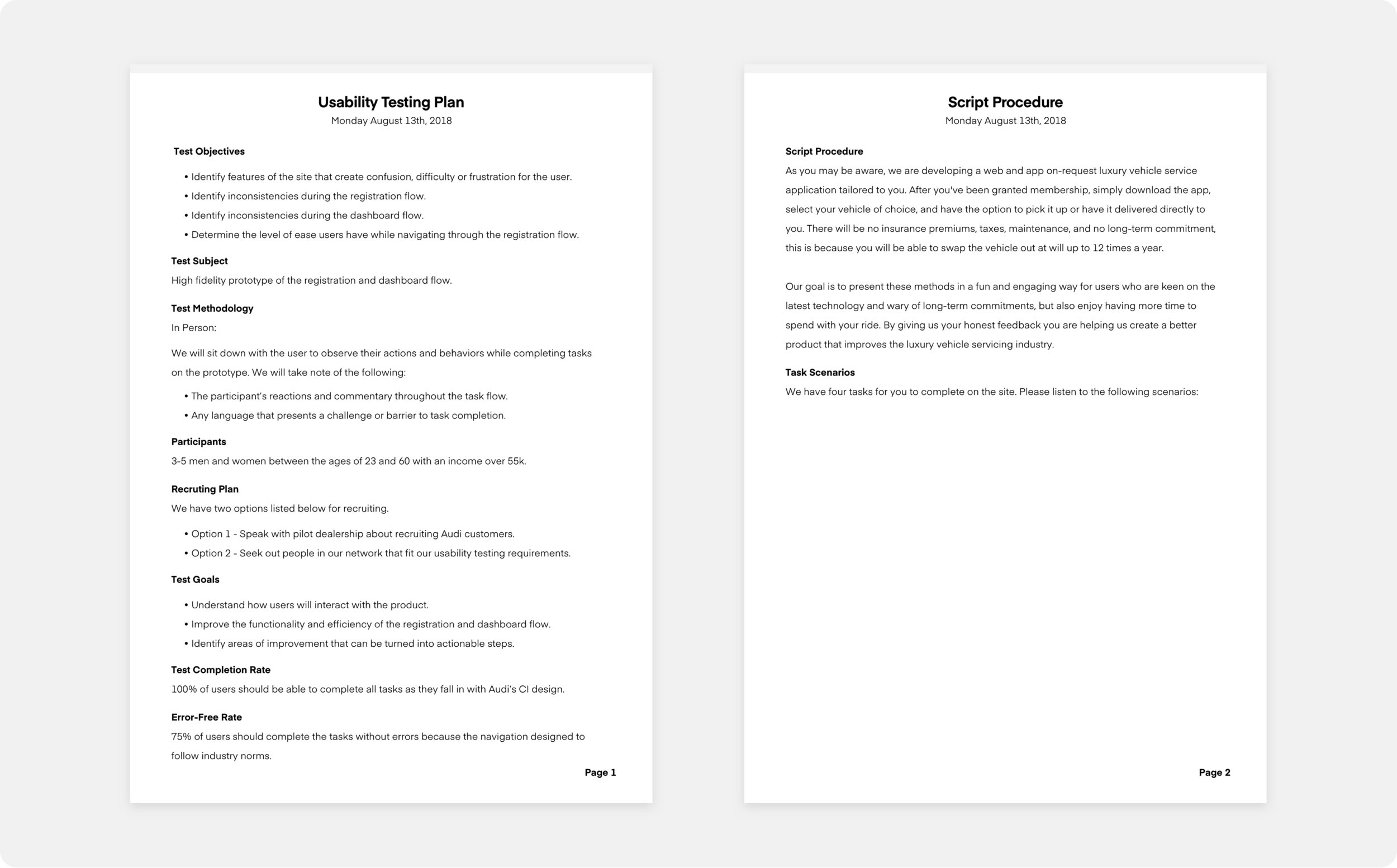
Audi select - Usability Testing Plan
REFLECTIONS
Some Positives
Being able to utilize both the user and operational service blueprints to identify places in where we could improve the entire customer service experience. This led to decisions such as allowing the user to go through the transaction booking platform and if needed, reach out to customer support via phone.
Customers loved the idea of being able to switch out vehicle simply by making a phone call, and having the vehicle delivered to their work or home.

Learnings after Launch
Although the appeal of a “no strings attached subscription” caught the attention of some younger and even first time luxury car buyers, the monthly price still felt high and therefore aspirational drivers were not buying in to the service.
An incentive program would need to be fostered to enable Audi sales floor team members and managers. Audi select is considered a separate program so sales floor members are more inclined to sell what’s on the floor and earn commission rather than lost a sale by telling the customer about Audi select.